
Summary: Successfully plan a European holiday for your dog by understanding EU Pet Passport rules, choosing pet-friendly accommodation, and packing essential travel supplies.
What this guide covers - EU pet travel regulations and documentation (e.g., Pet Passport) - Choosing suitable pet-friendly accommodation types (e.g., self-catering, hotels) - Packing essentials for your dog's holiday (bedding, food, toys, first-aid) - Safety tips for travelling with dogs (car, ferry, train) - Tips for settling your dog into a new environment - Finding pet services and supplies while on holiday (veterinarians, pet shops) - Second-hand considerations for travel gear (e.g., good condition carriers)
Planning Your European Dog Holiday: Understanding the Basics
Getting started: Planning a European holiday with your dog requires careful attention to detail, particularly regarding travel regulations. The entire process hinges on understanding the legal requirements for pets travelling within the EU, primarily through the EU Pet Passport system. This document is essential for proving your dog meets the health and identification standards required by member states.
Understanding these foundational requirements well in advance ensures a smooth trip. Each country may have slight variations, but the core principles of pet identification, vaccination, and health certificates remain consistent. Beginning your research early can prevent last-minute complications and ensure your dog is fit for travel and entry into your chosen destination.
EU Pet Passport Requirements
The EU Pet Passport is your dog's official travel document within the European Union. Issued by an authorised veterinarian, it contains crucial information about your pet. This includes details of their rabies vaccination, microchip identification, and veterinarian's signature, confirming compliance with EU regulations. Ensure your passport is up-to-date and valid for your entire trip.
- Rabies Vaccination: Your dog must be vaccinated against rabies by an authorised veterinarian. The vaccination must be valid for travel and administered at least 21 days before your departure.
- ISO Compliant Microchip: Every dog travelling within the EU must be identified by an ISO 11784/11785 compliant microchip. This microchip must be implanted before the rabies vaccination.
- Titer Test: For travel from certain non-EU countries, a rabies antibody titration test (titer test) may be required. This test assesses the effectiveness of the rabies vaccination.
- Health Certificate: While less common for intra-EU travel, some countries may require an additional health certificate from your vet, particularly for puppies or specific circumstances.
Choosing Your Travel Method
Your choice of travel method significantly impacts your dog's holiday experience and the planning required. Each option—car, ferry, or train—comes with its own set of rules, comfort considerations, and safety precautions. When travelling by car, consider regular breaks for your dog to stretch their legs and relieve themselves. Always secure your dog safely within the vehicle using a crash-tested car harness or a sturdy travel crate.
For ferry travel across EU waters, policies vary widely among operators. Some allow dogs in cabins, others only in kennels or designated pet areas on deck. Train travel within Europe also has diverse rules; many national and international services welcome dogs, sometimes requiring a separate ticket or a muzzle. Researching these specifics for each leg of your journey is paramount to a stress-free experience for both you and your canine companion.
Finding the Perfect Pet-Friendly Accommodation Across the EU

What to look for: Securing truly pet-friendly holiday homes, cottages, and villas across the EU requires thorough research beyond just seeing a 'pets welcome' tag. Many properties have specific policies regarding dog size, breed, or the number of pets allowed, which can significantly affect your booking. Always check the fine print for additional fees or deposits for pets, and clarify what amenities are genuinely available for your dog, such as enclosed gardens or accessible walking trails directly from the property.
Understanding these details upfront can prevent disappointment and unexpected costs upon arrival. Europe offers a vast array of options, from rustic countryside cottages in France to chic city apartments in Italy; the key is to match the accommodation's offering with your dog's needs and your holiday style. Look for properties that openly advertise their commitment to pet comfort, ensuring a welcoming environment for your entire family.
Types of Pet-Friendly Holiday Homes
Self-catering options like villas, cottages, and apartments are often the most flexible for dog owners. These typically provide more space, private gardens, and the freedom to maintain your dog's routine without disruptions. Many rural holiday homes are accustomed to canine guests, offering amenities like dog beds or feeding bowls. When choosing, consider the immediate surroundings, such as proximity to busy roads or suitable exercise areas, to ensure a safe and enjoyable stay for your dog.
- Villas: Often offer private outdoor space, ideal for dogs needing room to roam.
- Cottages: Provide a homely atmosphere, frequently in rural settings with good walking access.
- Apartments: Best for smaller, well-behaved dogs, often in urban areas. Check for clear pet rules regarding common areas.
- Pet-Friendly Hotels: While less common, some chains now offer specific services for dogs, including welcome packs and designated pet areas. Verify all policies before booking.
Always confirm the specific pet policy, including any restrictions on dog size or breed, before making a reservation. Some property owners may have insurance limitations based on the Fédération Cynologique Internationale (FCI) breed standards.
Checklist for Booking: Pet Policies, Fees, Amenities
When booking any pet-friendly accommodation, a comprehensive checklist is invaluable. Always confirm: the exact pet policy, including any breed or size restrictions, the number of dogs permitted, and whether dogs are allowed in all areas of the property. Enquire about any additional pet fees or security deposits, as these can vary significantly.
Essential amenities: for your dog might include an enclosed garden, nearby walking trails, or even a welcome pack with treats and waste bags. Understanding these details upfront prevents surprises and confirms that the accommodation genuinely caters to canine guests. Use detailed filters on booking sites and don't hesitate to contact property owners directly for clarification on any aspect of their pet policy. A truly pet-friendly establishment will be transparent about their offerings for dogs, ensuring a comfortable experience for all.
Essential Travel Supplies for Your Dog's European Adventure
Beyond the basics: Packing for your dog's holiday requires careful consideration to ensure their comfort, safety, and well-being throughout the trip. Beyond food and water bowls, a comprehensive packing list should include items that cater to their emotional and physical needs in unfamiliar surroundings. This includes familiar bedding that carries their scent, favourite toys to provide comfort and entertainment, and a well-stocked pet first-aid kit for minor emergencies.
Considering the European climate, pack according to the season and destination. For warmer climates, cooling mats or extra water bottles are crucial, while a warm jacket may be necessary for cooler regions. When selecting travel gear, prioritise durability and safety. Options such as crash-tested travel crates or robust car restraints are excellent investments for peace of mind. Investing in quality items, or carefully selected second-hand equipment, can make a significant difference to your dog's travel comfort.
Travel Crates and Carriers
When preparing for your dog's European adventure, a secure travel crate or carrier is an indispensable item, especially for car, train, or ferry travel. These provide a safe, confined space that can reduce stress and comply with most transport regulations. Ensure the crate is adequately sized, allowing your dog to stand, turn around, and lie down comfortably. Look for features like good ventilation, secure latches, and an easy-to-clean design. For car travel, crash-tested crates offer superior protection in the event of an accident.
- Rigid Plastic Carriers: Durable and easy to clean, suitable for most forms of transport. Ensure they meet IATA standards for air travel, though air travel might involve more complex regulations.
- Soft-Sided Carriers: Lighter and collapsible, ideal for smaller dogs and easier to store. Best for car travel or as a den within accommodation.
- Wire Crates: Offer excellent ventilation and visibility but can be bulky. Often preferred for larger dogs in cars if space allows.
- Car Safety Harnesses: While not a crate, a crash-tested safety harness secures your dog directly to the seatbelt, providing restraint in a collision.
- Second-hand considerations: When purchasing a used crate, check for structural integrity, broken latches, or sharp edges that could injure your dog. Ensure it can be thoroughly cleaned and sanitised.
Portable Feeding and Watering Solutions
Maintaining your dog's routine hydration and feeding is critical during travel. Portable, collapsible bowls made from silicone or durable fabric are incredibly practical and space-saving. Look for bottles with integrated drinking cups for easy access to water during walks or car journeys, ensuring your dog stays hydrated, especially in warmer climates or during long periods of activity. Packing their regular food prevents digestive upsets that can be caused by sudden diet changes, particularly for dogs with sensitive stomachs.
Consider also a sealed container for their kibble or treats to keep food fresh and prevent spills. These items are indispensable assets whether you are on a long road trip or simply enjoying a day out sightseeing. For longer trips, consider a small, insulated bag for any fresh or wet food to maintain its quality. Opting for durable, reusable items supports sustainable pet travel choices.
Comfort Items
Familiar items provide immense comfort and security for your dog in new environments. Bringing their own bed, blanket, or a favourite toy can significantly reduce anxiety and help them settle faster into your holiday accommodation. These items carry the comforting scents of home, creating a sense of familiarity amidst new smells and sounds. A well-loved chew toy can also be incredibly useful for distraction during periods of adjustment or when you need your dog to settle quietly.
Pack items that are easy to clean and transport. A washable blanket, for example, is far more practical than a bulky mattress. For dogs prone to anxiety, a special comfort item, such as a thunder shirt or a calming pheromone collar, could also be considered for travel days or the first few nights in a new place. The goal is to make the foreign feel familiar, allowing your dog to relax and enjoy the holiday alongside you.
Grooming Supplies and First-Aid Kits
A basic grooming kit is essential for keeping your dog clean and comfortable, especially after outdoor adventures. This should include a brush, paw wipes for muddy paws, and any specific items your dog requires, such as a detangling spray for long-haired breeds. More critically, a comprehensive pet first-aid kit is non-negotiable for any holiday. This should contain essentials for minor injuries and ailments, such as antiseptic wipes, bandages, tweezers for tick removal, pain relief suitable for dogs (as advised by your vet), and any prescription medications your dog regularly takes.
Knowing how to administer basic first aid can be invaluable when immediate veterinary care isn't available. Always include your vet's contact details and details of your pet insurance (if applicable). Prior to travel, consult with your veterinarian about potential health risks in your destination and any preventive measures, such as additional parasite control for ticks or sandflies, relevant to the European Animal Welfare Platform guidelines.
On the Road: Safe and Stress-Free Travel with Your Dog
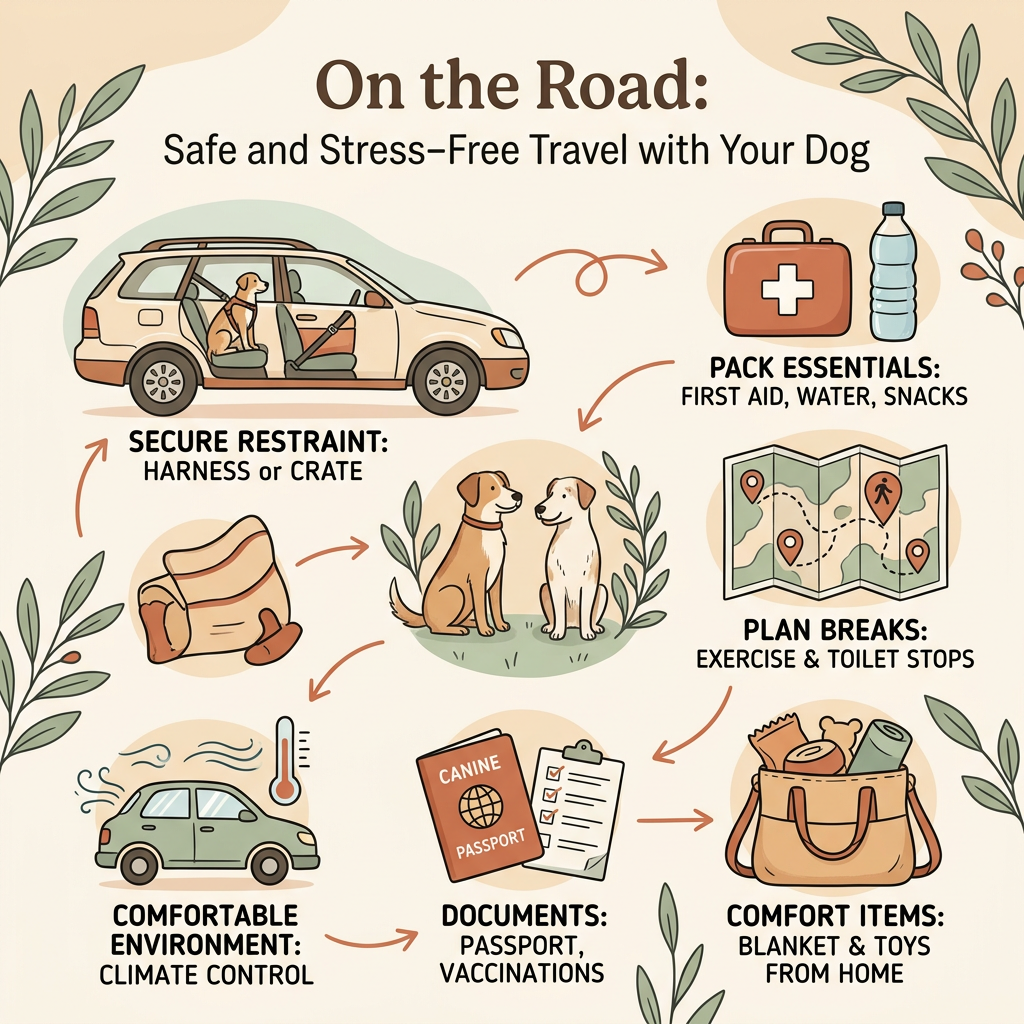
Prioritise safety: Ensuring your dog's safety and comfort during transit is paramount to a successful European holiday. Whether you're driving through France, taking a ferry to Ireland, or riding a train across Germany, each mode of transport requires specific preparations to minimise stress and risks. Proper restraint in vehicles, regular breaks, and careful management of environmental factors like temperature are critical. A well-prepared journey sets a positive tone for the entire trip, reducing anxiety for both you and your canine companion.
Understanding the unique challenges of each travel method, from potential motion sickness to the logistics of pet relief, allows you to proactively address issues before they arise. Remember that unfamiliar sounds, smells, and movements can be overwhelming for dogs, so creating a calm and secure environment for them during travel is essential. By focusing on fundamental safety and comfort measures, you can make the journey an enjoyable part of the adventure.
Car Travel Safety
Car travel with your dog requires strict adherence to safety protocols to protect both your pet and human passengers. Crash-tested car safety harnesses or secure travel crates are not just recommendations but vital safety equipment. This prevents your dog from becoming a dangerous projectile in the event of a sudden stop or collision. A loose dog can also cause distractions, leading to accidents. Position crates securely to prevent movement during transit.
- Secure Restraint: Always use a certified car safety harness or a sturdy, secured travel crate.
- Regular Breaks: Stop every 2-3 hours for potty breaks, water, and a short walk to stretch legs.
- Temperature Control: Never leave your dog unattended in a car, especially in warm weather. Ensure good ventilation.
- Pre-travel Exercise: A good walk before a long journey can help your dog settle down and sleep more during the ride.
Avoid feeding large meals immediately before or during the journey to minimise the risk of motion sickness. Smaller, frequent water stops are preferable to large gulps. Training your dog to be comfortable in their restraint system before the trip can significantly reduce travel-related stress.
Ferry and Train Etiquette for Dogs
Quando si viaggia in traghetto o in treno all'interno dell'UE, le politiche per i cani possono variare in modo significativo. Molte compagnie di traghetti consentono ai cani a bordo, ma spesso con restrizioni: alcune richiedono che i cani rimangano in un veicolo, altre offrono cabine adatte agli animali domestici o gabbie designate sul ponte. Confermare sempre le normative specifiche con la compagnia di traghetti scelta con largo anticipo, inclusi eventuali requisiti per museruole o guinzagli.
Anche il viaggio in treno, in particolare le rotte internazionali, può essere accomodante. Compagnie come SNCF (Francia) o Deutsche Bahn (Germania) in genere consentono ai cani più piccoli in trasportini di viaggiare gratuitamente o a tariffa ridotta, mentre i cani più grandi potrebbero richiedere un biglietto speciale e talvolta una museruola. La ricerca della politica specifica della linea ferroviaria è fondamentale per evitare problemi. Durante il transito, tieni sempre il tuo cane sotto controllo, rispetta gli altri passeggeri e assicurati che abbia accesso all'acqua. La direttiva UE sui diritti dei consumatori delinea i diritti di viaggio generali, ma le politiche specifiche sugli animali domestici sono stabilite dai singoli operatori.
Settling In: Making Your Dog Comfortable in New Surroundings
Routines are key: Arriving at a new holiday home can be disorienting for dogs, with new sights, smells, and sounds. Establishing a consistent routine from day one is crucial for helping your canine companion adapt quickly and feel secure. This includes sticking to regular feeding times, designated potty breaks, and familiar exercise schedules. A predictable routine provides comfort and signals to your dog that despite the change in scenery, their world remains stable and safe.
Providing familiar items, such as their bed and favourite toys, helps create a 'home away from home' feel. Dedicate a specific, quiet corner for your dog where they can retreat and feel secure. This personal space, combined with consistent daily habits, significantly reduces stress and anxiety, allowing your dog to relax and enjoy the holiday environment alongside you. Patience and positive reinforcement will be your best tools during this adjustment period.
Establishing Routines and Boundaries
When settling into new holiday accommodation, immediately establish a routine that mirrors your dog's home schedule as closely as possible. This includes feeding times, walks, and bedtime. Clearly define boundaries within the new space from the outset – for example, which rooms are off-limits, or where their designated resting spot is. Consistency in enforcing these rules helps your dog understand their new environment and reduces confusion or misbehaviour.
For instance, if your dog is not allowed on furniture at home, enforce this rule from day one in the holiday home. Use positive reinforcement to reward calm behaviour and adherence to boundaries. A relaxed, confident atmosphere from your side will also help your dog feel more secure. Over time, this consistent approach will build trust and allow your dog to settle seamlessly into the rhythm of your holiday, fostering a happy and stress-free environment for everyone involved.
Managing Separation Anxiety in a New Place
Separation anxiety can intensify for dogs in unfamiliar surroundings, due to changes in routine and the absence of familiar cues. To mitigate this, avoid leaving your dog alone for long periods immediately upon arrival. Gradually introduce short periods of separation, starting with just a few minutes, while providing engaging toys or treats to distract them. This slow desensitisation helps your dog build confidence that you will return.
- Gradual Absences: Start with very short periods alone and slowly increase the duration.
- Familiar Items: Leave a garment with your scent or their favourite blanket to provide comfort.
- Enrichment: Provide puzzle toys or long-lasting chews to keep them occupied during your absence.
- Calming Aids: Consult your vet about natural calming supplements or pheromone diffusers if anxiety is severe.
A good walk before you leave can also help, as a tired dog is often a calmer dog. If possible, consider hiring a local, reputable dog walker or sitter for longer excursions, ensuring minimal disruption to your dog's well-being and maintaining their routine. For severe cases, consulting a veterinary behaviourist before travel might be beneficial.
Local Support: Finding Pet Services During Your EU Holiday
Peace of mind: Even on the most meticulously planned holidays, unforeseen circumstances can arise. Knowing how to access local pet services—from reputable veterinarians to well-stocked pet shops—provides invaluable peace of mind when travelling with your dog across the EU. Before you depart, make a list of emergency contacts and research local veterinary clinics near your accommodation. This proactive approach ensures you're prepared for any health issues or unexpected needs that may occur, allowing you to react swiftly and effectively.
Having a basic understanding of local animal welfare standards and services available in your chosen European destination is also beneficial. Many EU countries boast high standards of veterinary care and a wide array of pet supply stores. Being prepared enables you to address any situation from a minor ailment to topping up on dog food, without undue stress or disruption to your holiday. Utilising online resources and local recommendations can streamline this process effectively.
Locating Reputable Veterinarians Abroad
Before your trip, identify several veterinary clinics in close proximity to your holiday accommodation. Online searches using terms like 'emergency vet [city name]' or 'English speaking vet [region]' are helpful. Check for clinics with positive reviews and inquire if any staff speak your language, which can be invaluable in an emergency. Ensure you have your dog's medical history, vaccination records, and a copy of their EU Pet Passport readily accessible.
- Pre-trip Research: Identify emergency vets near your destination.
- Medical Records: Keep your dog's full medical history and EU Pet Passport handy.
- Pet Insurance: Confirm your pet insurance policy covers international travel and vet visits abroad.
- Local Recommendations: Ask locals, your accommodation host, or other pet owners for trusted vet clinics.
In case of an emergency, having these details organised saves precious time. Your own veterinarian may also be able to provide recommendations for clinics in your destination country. Remember, timely access to professional veterinary care can be critical for your dog's health and well-being, reiterating the importance of advanced planning for your dog-friendly holiday.
Finding Local Pet Shops for Supplies
Anche se dovresti cercare di portare con te la maggior parte degli articoli essenziali per il tuo cane, potresti aver bisogno di rifornire cibo, snack, giocattoli o anche un articolo inaspettato come un nuovo guinzaglio. I negozi di animali locali (ad esempio, "pet shop Galway" o "pet shop Dundalk" in Irlanda) sono risorse eccellenti. Le grandi catene di supermercati in Europa spesso hanno un reparto animali, ma i negozi di animali dedicati offrono una selezione più ampia, inclusi alimenti specializzati, giocattoli resistenti e prodotti per la toelettatura.
L'utilizzo di mappe online per cercare "dyrebutikk" (Norvegia), "Tierhandlung" (Germania) o "animalerie" (Francia) può aiutarti a localizzare i negozi. Cerca attività commerciali indipendenti che spesso vendono marchi locali o opzioni ecologiche, in linea con scelte sostenibili. Verifica cosa è disponibile a livello locale: Questo è particolarmente importante se il tuo cane ha esigenze dietetiche specifiche, poiché non tutti i marchi sono universalmente disponibili in tutta l'UE. Interagire con i proprietari dei negozi locali può anche fornire consigli sulla cura degli animali domestici e raccomandazioni sui prodotti regionali.
Travel tip: Always carry a small bag of your dog's regular food, even if you plan to buy more at your destination, to cover any immediate needs upon arrival.
| Requirement | Description | Mandatory For All EU Travel | Special Considerations |
|---|---|---|---|
| Microchip | ISO 11784/11785 compliant for identification. | Yes | Must be implanted before rabies vaccination. |
| Rabies Vaccination | Valid and administered by an authorised vet. | Yes | 21-day waiting period after primary vaccination. |
| EU Pet Passport | Official document detailing ID and vaccinations. | Yes | Issued by an authorised EU veterinarian. |
| Titer Test | Blood test for rabies antibodies. | Only for travel from specific non-EU countries | Confirms vaccination efficacy; check country rules. |
| Health Certificate | Additional vet certificate. | No, but recommended to check specific country rules | Some countries or airlines might require it. |
Free returns
Try at home with confidence — returns are always free.
Pet-first picks
Every recommendation is made for dogs and cats.
Circular choice
Second-hand and handcrafted finds reduce unnecessary new production.
♻️ Circular Economy Impact Choosing durable and reusable pet travel gear reduces textile waste by up to 1.5 kg per trip and minimises the carbon footprint associated with new product manufacturing.