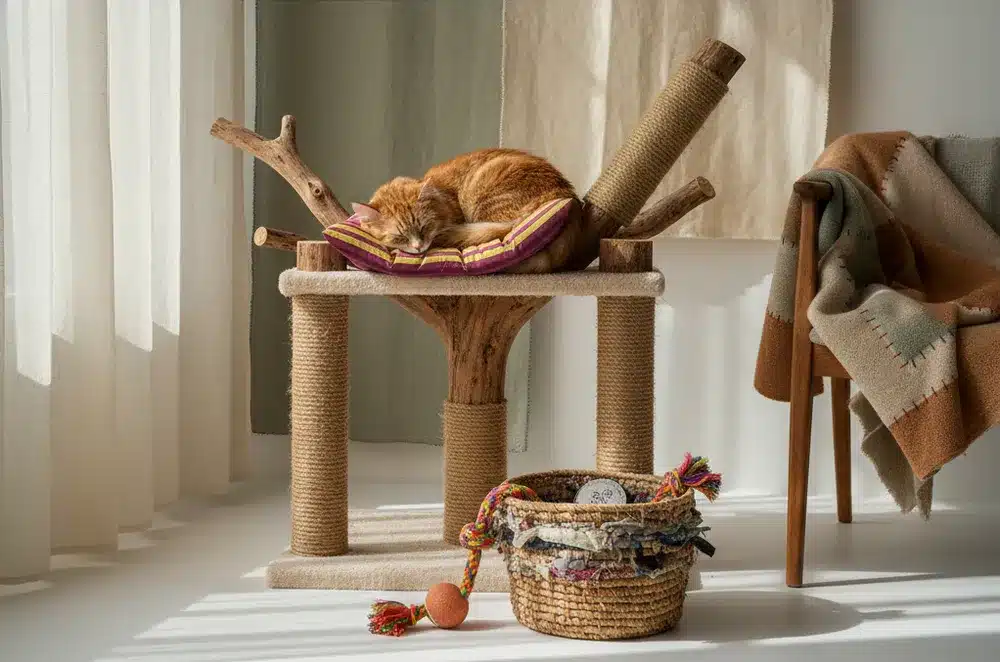
Why a Robust Cat Scratching Post is Crucial for Large Cats
Physical Needs of Large Cat Breeds: Large cat breeds, such as the Maine Coon and the Norsk Skovkat (Norwegian Forest Cat), possess significant size and strength compared to their smaller counterparts. These powerful felines require a cat scratching post that can withstand their weight and vigorous scratching behaviour without wobbling or toppling. A standard, lightweight scratching post, often designed for average-sized domestic cats, will quickly prove inadequate, leading to instability and potential safety hazards. The Fédération Internationale Féline (FIFe) standards recognise the impressive stature of these breeds, underscoring the necessity for appropriately scaled accessories that support their natural athleticism and physical development.
Moreover, the larger claws of breeds like the Maine Coon need ample opportunity for proper maintenance. Scratching is not merely a destructive act; it's an essential behaviour for shedding outer claw layers, marking territory, and stretching muscles. Without a sufficiently robust and tall scratching surface, large cats may resort to using furniture, doorframes, or carpets, causing damage and frustration for owners. An unsuitable post can also deter use, as the cat may feel unsafe or unable to get a satisfying stretch. Therefore, investing in a high-quality, stable, and appropriately sized cat scratching post is paramount for the well-being and behavioural needs of your large feline companion.
Scratching Behaviour and Claw Care
Understanding Feline Instincts: Scratching is an innate and vital behaviour for all cats, serving multiple purposes beyond simple claw sharpening. Large cats, due to their impressive size and powerful musculature, exhibit this behaviour with even greater intensity. Beyond removing the dead outer sheath of their claws to reveal a new, sharper surface, scratching allows cats to deposit scent from glands in their paws, marking their territory both visually and chemically. This is particularly important for confident and territorial breeds. Additionally, the act of scratching provides an excellent full-body stretch, working muscles from their paws all the way up their spine, which is crucial for maintaining flexibility and physical health in active large breeds.
- Shedding claw sheaths: Essential for healthy claw maintenance.
- Territorial marking: Visual and scent communication.
- Stress relief: A natural outlet for energy and anxiety.
- Muscle stretching: Promotes flexibility and physical well-being.
- Satisfying texture: Provides an appropriate surface for instinctual behaviour.
Without adequate opportunities to safely and effectively scratch, large cats can develop behavioural issues such as anxiety, destructive scratching of household items, or even become lethargic due to unfulfilled instincts. A proper cat scratching post, specifically designed to withstand the vigour of a Maine Coon or Norsk Skovkat, offers a dedicated, acceptable outlet for these powerful instincts, promoting a happy and well-adjusted cat. The taller the post, the more satisfying the stretch will be for a large cat, demonstrating the importance of height in meeting their needs.
When selecting a new or second-hand scratching post, ensure its height allows your large cat to fully stretch out while standing on their hind legs to achieve a satisfying scratch.
When Quality and Sustainability Meet: Materials for a Durable Cat Scratching Post
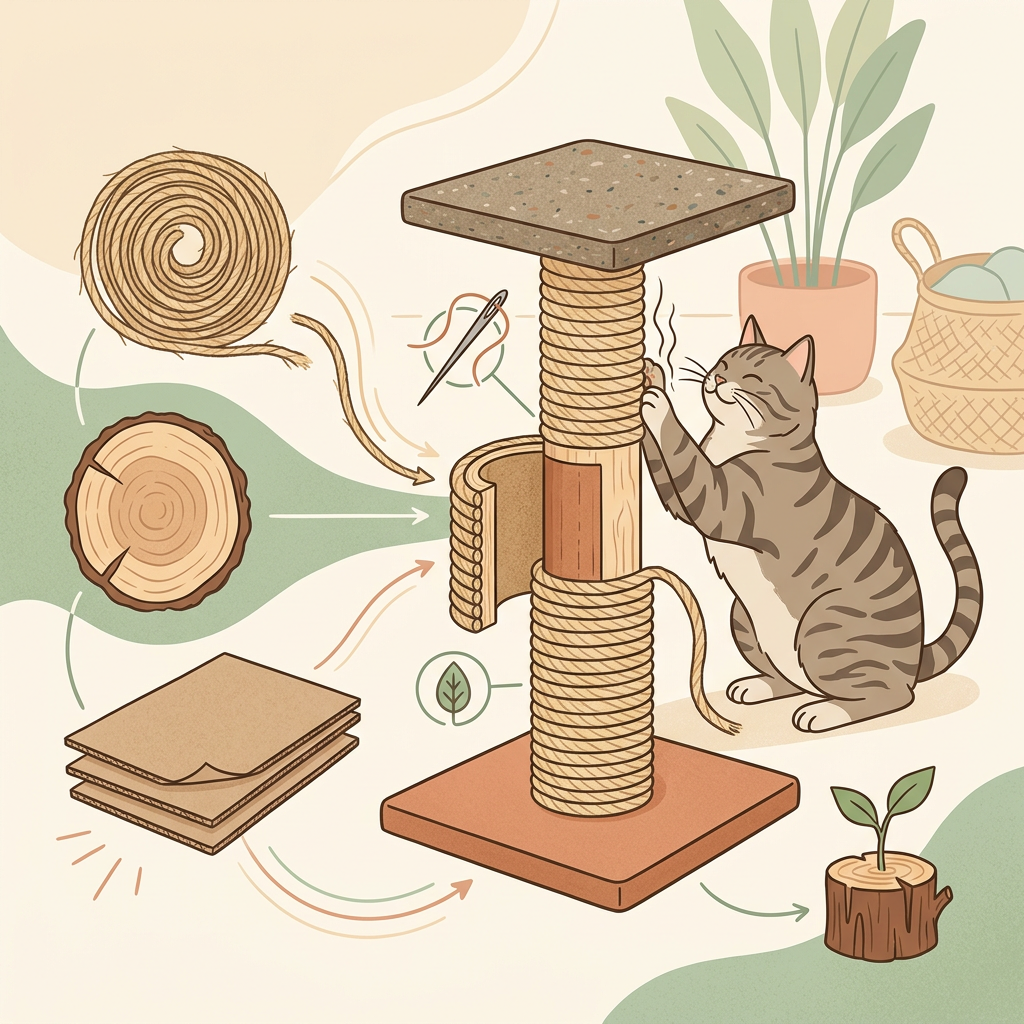
Key Takeaway: The choice of materials profoundly impacts both the durability and sustainability of a cat scratching post. For large breeds, where longevity and stability are paramount, opting for natural, robust, and often recycled materials is a smart, eco-conscious decision. These materials not only withstand rigorous use but also contribute to a lower environmental footprint, aligning with circular economy principles. When considering a scratching post, examine its core structure and scratching surfaces carefully. Investing in durable materials means a product will last longer, reducing the need for frequent replacements and subsequently lowering waste.
Natural materials such as Sisal and solid wood are superior choices for large cat scratching posts. Sisal, a natural fibre derived from the agave plant, is incredibly durable and provides an ideal texture for cats to sink their claws into. Unlike synthetic carpets, sisal shreds cleanly and lasts much longer under heavy use from a powerful feline. Solid wood, particularly for the core structure, offers unmatched stability and longevity. Recycled or upcycled wood further enhances the sustainability profile, turning waste into a valuable resource. These material choices not only deliver a superior product experience for your cat but also support responsible consumption habits within the EU.
Sisal vs. Jute Rope: Advantages and Disadvantages
Material Comparison for Scratching Surfaces: When choosing a cat scratching post, especially for robust large breeds like Maine Coons, the material of the scratching surface is critical. Sisal and jute are two common natural fibre options, each with distinct characteristics. Sisal, derived from the Agave sisalana plant, is renowned for its exceptional durability and coarse, tightly woven texture. This makes it incredibly satisfying for cats to scratch, as it provides excellent resistance and helps to effectively shed claw sheaths. Sisal also tends to be more resistant to fraying and unraveling compared to other fibres, ensuring a longer lifespan for the scratching post even with vigorous use. It’s also often untreated, making it a natural and safe option for pets.
- Sisal: Highly durable, coarse texture, excellent for claw conditioning, good longevity.
- Jute Rope: Softer, more fibrous, appealing to some cats, but may fray faster.
- Longevity: Sisal generally outlasts jute under heavy scratching from large cats.
- Sustainability: Both are natural fibres, but sisal's superior durability means less frequent replacement.
Jute rope, while also a natural fiber, typically has a softer, more loosely woven texture than sisal. Some cats may prefer the feel of jute, but for large, powerful scratchers, it may wear out more quickly, leading to more frequent replacement of the scratching surface. The softer nature of jute can mean it doesn't provide the same dense resistance that large cats need for optimal claw care and muscle stretching. When selecting a second-hand scratching post, always inspect the condition of the sisal or jute thoroughly. Look for areas of heavy wear or unraveling that might indicate a need for repair or replacement of the affected sections to ensure it remains functional and appealing to your cat. Choosing the right scratching surface prolongs the item’s utility.
Solid Wood and Recycled Wood as a Foundation
The Core of Durability: The foundation and structural components of a quality cat scratching post are just as important as the scratching surface, especially for large and active breeds. Solid wood is an unparalleled material for ensuring stability, longevity, and overall safety. Unlike posts constructed with flimsy particle board or plastics, a solid wood core can withstand the weight and force of a powerful Maine Coon or Norwegian Forest Cat without wobbling, tipping, or breaking down over time. This robust construction is essential for creating a safe environment where your cat can scratch, climb, and perch with confidence.
- Stability: Solid wood prevents wobbling and ensures safety during use.
- Durability: Withstands heavy use from large breeds for many years.
- Sustainability: Recycled or sustainably sourced wood reduces environmental impact.
- Safety: Minimises risk of injury from structural failure.
- Aesthetics: Natural wood can complement home decor.
From a sustainability perspective, utilising recycled or upcycled wood for scratching post construction offers significant environmental benefits. This approach diverts waste wood from landfills and reduces the demand for virgin timber, conserving natural resources. When sourcing a second-hand cat scratching post, always prioritise those with a visibly solid wood structure. Check for any signs of water damage, rot, or excessive cracking that might compromise its integrity. The heavier and more substantial a post feels, the more likely it is to be built from durable materials, providing a safe and lasting scratching solution for your beloved feline. Understanding solid wood construction provides peace of mind.
What to Look for in a Second-Hand Cat Scratching Post for Large Cats?
What to Check: Opting for a second-hand cat scratching post is an excellent way to embrace sustainability and potentially find a high-quality product at a fraction of the cost. However, a thorough inspection is crucial to ensure it meets the specific needs and safety standards for your large cat breed. Your primary focus should be on stability, the condition of the scratching surfaces, and overall hygiene. A well-chosen pre-owned scratching post can provide years of service, but a hasty purchase could lead to disappointment or, worse, an unstable structure that poses a risk to your pet.
When inspecting a second-hand cat scratching post, begin by assessing its overall stability. For large cats, a heavy, wide base is non-negotiable. Try to gently rock the post to identify any wobble or looseness in the joints. Check all connections, bolts, and screws to ensure they are tight and secure. Any sign of excessive movement indicates a potential safety hazard and should be a red flag. The structural integrity is paramount; even if the scratching surfaces can be replaced, a weak frame is not worth the risk. Inspecting structural stability thoroughly is key.
Checklist for Stability and Construction
Ensuring a Safe Foundation: The stability of a cat scratching post is paramount, especially for large breeds. Before purchasing a second-hand post, perform a comprehensive stability check. Begin by examining the base — it should be wide and heavy, providing a solid foundation that resists tipping. For Maine Coons and Norsk Skovkats, a base with dimensions of at least 60 cm x 60 cm is advisable to distribute their weight effectively. Next, assess the connections between different components. Are the posts securely attached to the base and any platforms? Look for robust bolts and screws rather than weak glues or staples. Give the entire structure a firm but gentle shake to identify any movement or creaking sounds. A truly stable post will feel solid and immovable.
- Base Size: Ensure a wide, heavy base for large cat breeds (e.g., 60x60 cm).
- Joint Integrity: Verify all connections (bolts, screws) are tight and secure.
- Wobble Test: Gently shake the post to check for any instability.
- Material Quality: Prioritise solid wood components over particle board.
- Overall Height: Confirm the post is tall enough for a full stretch without tipping.
Furthermore, pay close attention to the materials used in the construction. Solid wood components for the main columns and platforms are far superior to particle board or plywood, which can degrade over time, especially if exposed to moisture. Check for signs of water damage, swelling, or crumbling in any wood-based materials. For tall cat trees, ensure adequate bracing or multiple points of contact with the base. Some larger cat scratching posts might even have wall-mounting options, which significantly enhance stability – confirm if these fixtures are present and in good condition. A well-constructed post, even if second-hand, will provide a safe and enduring haven for your cat. Learning about construction quality promotes safety.
Assessing the Condition of the Scratching Surface
Evaluating Wear and Tear: The scratching surface is the most used part of any cat scratching post, and its condition is crucial for both functionality and hygiene. When examining a second-hand post, focus intently on the sisal or jute wrapped around the posts or platforms. Look for areas where the material is heavily frayed, worn thin, or completely missing. While some wear is expected, excessive damage means the post may no longer be appealing or effective for your cat and could require significant repair or replacement.
Check for deep grooves or bald spots, particularly in areas where paw pads would make contact. If the underlying core material is exposed in multiple places, this indicates the scratching surface is near the end of its life. While sisal rope can often be re-wrapped, consider the effort and cost involved. Also, inspect the material for any strong odours, which could indicate a lack of previous cleaning or ingrained pet smells. A clean, relatively intact sisal surface ensures your cat will be more likely to use it, preventing them from turning to your furniture instead. Assessing material wear helps determine value.
Cleaning and Disinfecting Used Pet Furniture
Essential Hygiene Practices: Before introducing any second-hand pet item into your home, especially a cat scratching post, thorough cleaning and disinfection are non-negotiable. This step is crucial for eliminating any lingering odours, hidden pests, allergens, or bacteria that could pose a risk to your cat's health or deter them from using the new item. Even if the item appears clean, assume it requires a deep clean. Start by vacuuming the entire scratching post meticulously, using a brush attachment to get into all crevices and remove loose fur, dust, and debris. This helps to remove potential flea eggs or dander.
- Vacuuming: Thoroughly remove fur, dust, and debris from all surfaces.
- Spot Cleaning: Use pet-safe enzymatic cleaners for visible stains and odours.
- Disinfection: Apply a pet-safe disinfectant spray, ensuring it's non-toxic when dry.
- Sun Exposure: Allow the item to air out in direct sunlight for natural sanitisation.
- Fabric Refresh: For removable fabric parts, machine wash on a hot cycle if possible.
For fabric-covered sections or platforms, if removable, wash them in hot water (at least 60°C) with a pet-safe detergent. For non-removable fabric or sisal surfaces, use a fabric-safe, pet-friendly enzymatic cleaner to tackle stains and odours. Always choose products that are non-toxic and specifically designed for pet use to avoid irritation. Afterwards, apply a pet-safe disinfectant spray, ensuring it dries completely before your cat has access. Allowing the scratching post to air out in direct sunlight for several hours is also highly effective in killing bacteria and eliminating pheromone traces from previous pets. This rigorous cleaning process ensures the second-hand item is fresh, safe, and appealing for your feline friend. Proper cleaning of pet items safeguards your pet’s health.
Placement and Maintenance: Maximise the Lifespan of Your Scratching Post
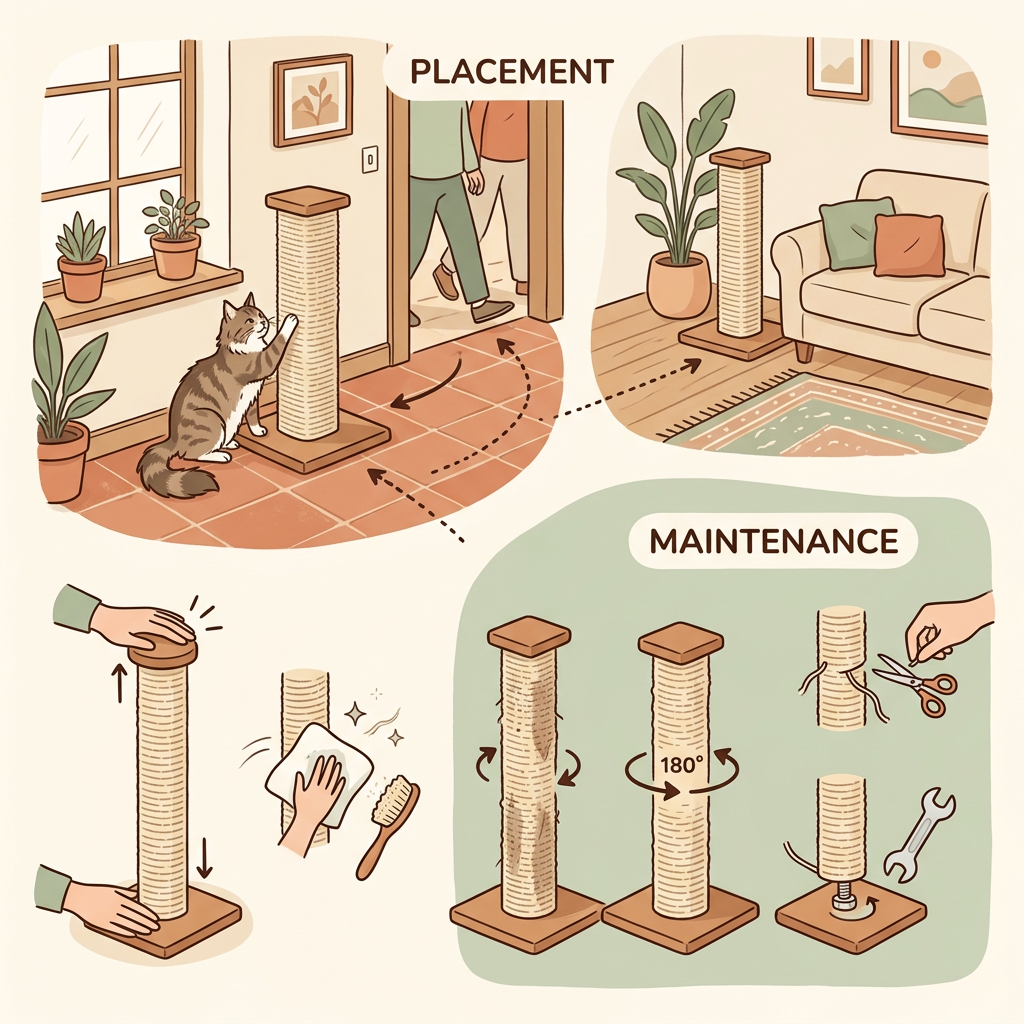
Optimal Placement for Engagement: The strategic placement of your cat scratching post significantly influences whether your cat will use it consistently and efficiently. For large cat breeds, a single, poorly placed post may not suffice. Cats naturally scratch to mark their territory, both visually and through scent glands in their paws. Therefore, placing the scratching post in prominent areas where your cat spends a lot of time, or near where they already exhibit scratching behaviour (e.g., next to furniture they've targeted), is crucial. Consider high-traffic zones such as living rooms, hallways, and near sleeping spots. For multi-cat households or very large homes, multiple scratching posts in different locations are often beneficial.
Furthermore, ensure the scratching post is not hidden away in an obscure corner. Cats prefer to scratch in areas where they can be seen and where their scent marks will be noticed. The post should not block walkways or become a tripping hazard, but it should be easily accessible. For a large cat, the post needs to be stable enough that they can lean their full body weight into it without it moving. If your cat enjoys perching high, ensure the post can be placed near a window or a comfortable viewing point. Effective post placement encourages natural behaviour.
Routine Inspection and Maintenance
Prolonging Product Life: Regular inspection and maintenance are vital for maximising the lifespan of your cat scratching post, especially for durable models designed for large breeds. Make it a habit to visually inspect the entire structure at least once a month. Pay close attention to the scratching surfaces, particularly sisal, looking for excessive fraying, loose ends, or areas where the material has become thin or worn away. Address these issues promptly to prevent further damage and ensure your cat continues to have an appealing scratching surface. Loose threads can be trimmed to prevent entanglement, and heavily worn sections may require re-wrapping.
- Visual Check: Inspect sisal/jute for fraying, wear, or loose ends.
- Structural Integrity: Check all bolts, screws, and connections for tightness.
- Base Stability: Ensure the base remains firm and level; tighten if wobbly.
- Cleanliness: Vacuum regularly to remove fur and debris.
- Scratching Surface Rotation: If possible, rotate posts or platforms to even out wear.
Beyond the scratching surfaces, check the structural integrity of the entire unit. For posts with multiple levels or platforms, ensure all connections (bolts, screws, and brackets) remain tight. With daily use from a large cat, these can sometimes loosen over time, leading to instability. Re-tighten any loose fasteners immediately using appropriate tools. Also, inspect the base for any signs of movement or unevenness on the floor. Regular vacuuming will keep the scratching post free of accumulated fur and dust, which can prolong the life of fabric components and maintain a fresh appearance. Routine post care ensures longevity.
From Kitten to Adult: Understanding Your Cat's Scratching Needs
Developing Scratching Behaviour in Kittens and Adult Cats: Scratching is an instinctual behaviour that begins in kittenhood and evolves throughout a cat's life. Even young kittens will instinctively paw and scratch at surfaces, learning to hone their claws and stretch their tiny bodies. Providing appropriate scratching outlets from a young age is crucial for shaping positive habits and preventing destructive behaviour later on. For kittens, a smaller, stable scratching post or pad made of appealing materials like sisal or cardboard is ideal. As they grow, their needs will escalate; a small kitten post will be entirely inadequate for the powerful stretches of a large adult cat like a Maine Coon.
As cats mature, their scratching becomes more robust and purposeful. Adult cats use scratching not only for claw maintenance but also extensively for territorial marking and muscle conditioning. A large cat requires a tall, sturdy scratching post that allows them to stretch their entire body length without restraint, mimicking the natural act of scratching a tree trunk. If these fundamental needs are not met, adult cats, particularly those of larger breeds with stronger instincts, are highly likely to redirect their natural urges onto household furniture, carpets, or even walls. Understanding feline development is key to prevention.
Negative Consequences Without Adequate Scratching Places
Impact on Well-being and Furniture: The absence of suitable scratching facilities for a cat, especially a large breed, can lead to several detrimental outcomes for both the feline and the household environment. Firstly, without an appropriate scratching post, your cat's claws will not be properly maintained. This can result in overgrown claws that become uncomfortable, snag on carpets or furniture, and potentially lead to paw injuries or infections. Furthermore, the inability to shed the outer claw sheaths can be a source of frustration for the cat, as it disrupts a natural biological process.
- Damaged Furniture: Cats will inevitably use sofas, chairs, or carpets.
- Overgrown Claws: Leads to discomfort, snags, and potential injuries.
- Behavioural Stress: Unfulfilled instincts can cause anxiety and frustration.
- Territorial Issues: Lack of proper marking outlets can increase insecurity.
- Veterinary Costs: Potential for paw injuries or infections.
Beyond physical discomfort, the lack of a designated scratching area often results in significant damage to household furniture, carpets, and other textiles. Cats are driven by instinct to scratch, and if a suitable scratching post is not provided, they will find an alternative, typically a cherished sofa or heirloom armchair. This can create tension between pet and owner and lead to costly repairs or replacements. Moreover, denying a cat this fundamental outlet can lead to behavioural problems such as increased stress, anxiety, or even aggression, as their innate needs remain unfulfilled. Providing a robust scratching post is therefore an investment in your cat’s physical and mental health, as well as the preservation of your home. Preventing furniture damage starts with a good post.
More Than Just a Scratching Post: Multifunctional Furniture for Large Cats
Integrated Sleeping Areas and Viewing Platforms: For large cat breeds, a cat scratching post can be much more than just a surface for claw maintenance; it can serve as a vital piece of enrichment furniture that promotes physical and mental well-being. Multifunctional scratching posts or cat trees often incorporate integrated sleeping areas, such as cosy cubbies or elevated beds, providing secure and comfortable spots for your cat to rest and observe their surroundings. These elevated perches are particularly appealing to large cats, who naturally seek high vantage points to feel safe and survey their territory. A high-quality, sturdy sleeping platform allows them to relax without fear of wobbling or collapse.
Viewing platforms are another invaluable feature. Large cats love to watch the world go by, whether it's out a window or from a commanding position within the room. A well-designed cat tree offers multiple levels and platforms at varying heights, catering to their exploratory nature and providing ample space for stretching, climbing, and basking in sunlight. When selecting a multifunctional post, ensure that all platforms and sleeping areas are robustly constructed and generously sized to accommodate the full body of a Maine Coon or Norsk Skovkat comfortably. Fluffy cushions and soft linings within these areas add an extra layer of luxury and encourage regular use. Choosing a multifunctional cat tree enhances their environment.
Climbing Opportunities and Exercise
Challenging