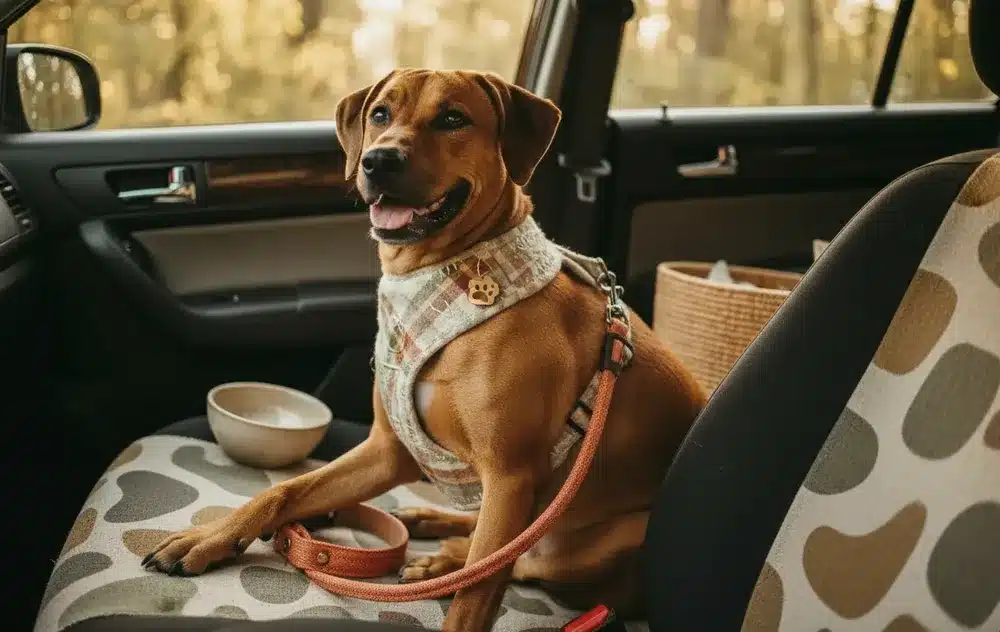
Summary: Selecting a dog seat belt requires matching the type, size, and material to your dog's breed and temperament, ensuring vehicle safety and comfort.
Choosing the Right Dog Seat Belt: Beyond 'One Size Fits All'
Understanding your dog's unique needs is the first step towards a truly safe journey. The market for dog seat belts is diverse, offering options from simple harnesses that integrate with standard seat belts to elevated booster seats and robust travel crates. Each type caters to different dog sizes, temperaments, and owner preferences, making a
Always measure your dog carefully according to the manufacturer's guidelines, paying attention to chest girth and weight, before purchasing a dog seat belt. This ensures the best fit and maximum safety, regardless of the specific product type.
A Labrador Retriever, for example, typically thrives with a crash-tested harness system that directly attaches to the vehicle's seat belt anchorage points, providing security without overly restricting movement. In contrast, smaller breeds like a Chihuahua or a Yorkshire Terrier might benefit more from a booster seat, which elevates them for a better view while keeping them contained, or a small, secure travel carrier. Travel crates and carriers are suitable for all sizes, especially for dogs prone to anxiety, but require sufficient space in the vehicle. Breed-specific characteristics also play a role; a naturally calm Basset Hound might adapt easily to a harness, whereas a more energetic Jack Russell Terrier could require a more contained solution to prevent distractions. The European pet travel regulations emphasise the importance of securing pets to prevent injury to themselves and other passengers, reinforcing the need for a well-chosen restraint system. Remember to consider your car type too; some anchor systems are more compatible with specific vehicle models or ISOFIX/LATCH points.
Ensuring Safety and Comfort: What to Look for in a Dog Seat Belt
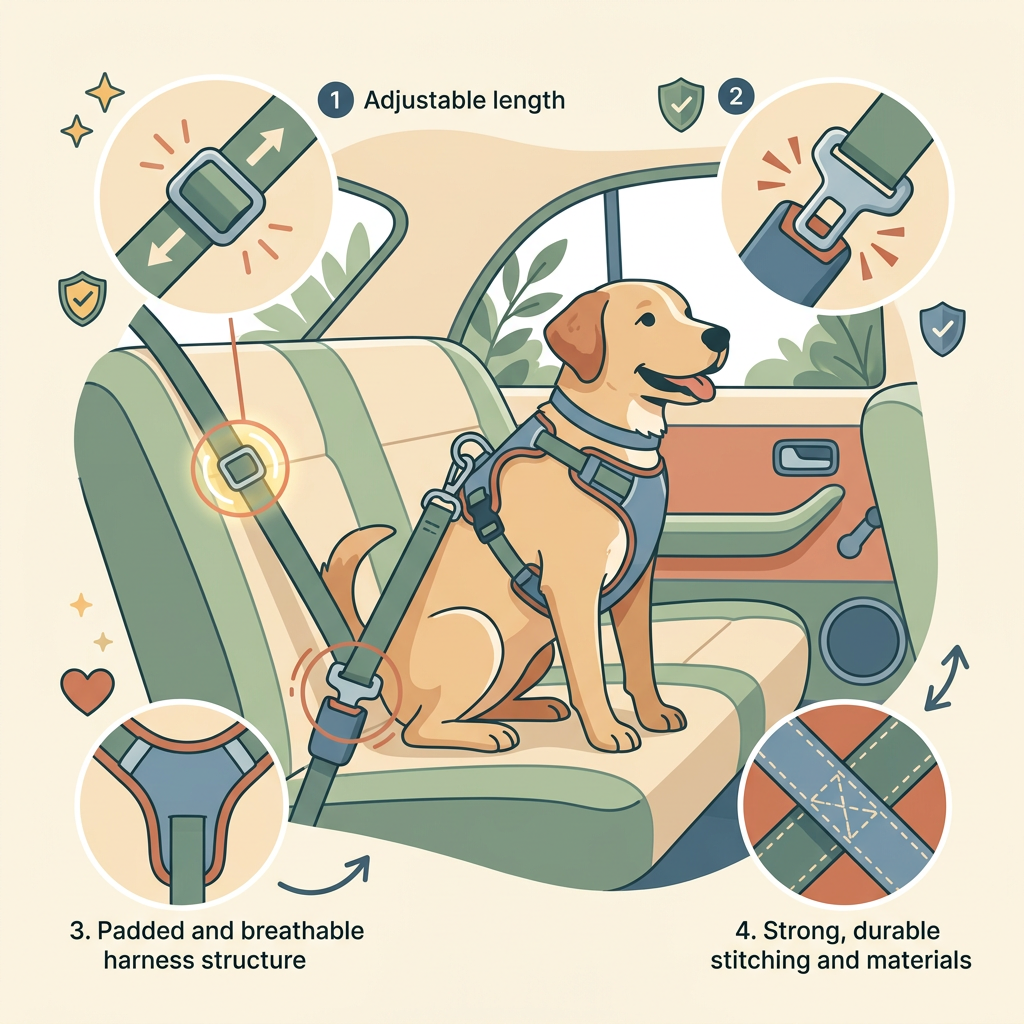
Prioritise safety features and robust construction. When evaluating dog seat belts, the primary focus should be on their ability to protect your pet during sudden stops or collisions. Look for products that feature strong webbing materials, similar to those used in human seat belts, and robust, high-quality buckles that resist accidental release. Some premium dog car harnesses undergo crash-testing to established standards, a crucial indicator of their protective capability. These tests often simulate real-world impact scenarios, providing a clear understanding of how the harness performs under stress. Always check for multiple attachment points to distribute force evenly across your dog's body, preventing concentrated pressure on sensitive areas. Materials like heavy-duty nylon or polyester blends are common for their durability and impact-absorbing properties, crucial for ensuring the longevity and effectiveness of the seat belt.
| Feature | Harness Systems | Booster Seats | Travel Crates |
|---|---|---|---|
| Primary Benefit | Direct restraint | Elevated view | Secure enclosure |
| Ideal For | Medium to large dogs | Small dogs | Anxious or very small dogs |
| Crash Test Availability | Often available | Less common | Some models |
| Attachment Type | Vehicle seat belt | Vehicle seat belt | Secured in boot/seat |
| Comfort Focus | Padding, adjustability | Soft lining | Ventilation |
Beyond safety, your dog's comfort is paramount for stress-free travel. A well-designed dog seat belt should include ample padding, particularly around the chest and belly, to prevent chafing and discomfort during long journeys. Adjustable straps are essential to achieve a snug yet comfortable fit for diverse canine anatomies, from a slender Saluki to a stocky Bulldog, ensuring the harness doesn't restrict breathing or movement. Pay close attention to how your dog behaves once secured; signs of discomfort such as excessive licking, chewing at the straps, whining, or attempting to wriggle out could indicate an improper fit or material irritation. Veterinary advice on canine car anxiety often highlights the importance of gradual acclimatisation to car restraints and positive reinforcement. Ease of cleaning is also a practical consideration; materials that are machine washable or can be easily wiped down maintain hygiene, especially after muddy walks or drooly trips. High-quality dog seat belts will integrate seamlessly with standard car seat belt anchorage points (ISOFIX/LATCH compatible options exist for newer vehicles), ensuring a secure connection to the vehicle.
Second-Hand Savvy: Inspecting Pre-Owned Dog Seat Belts and EU Travel Regulations

Making a sustainable choice means knowing what vital checks to perform. Opting for a second-hand dog seat belt is an excellent way to support the circular economy and reduce textile waste, but it requires careful inspection to ensure safety remains uncompromised. When examining a pre-owned dog seat belt, start by closely checking all webbing and straps for fraying, cuts, or thinning. Strong webbing materials are essential for impact absorption, so any compromise could significantly reduce its effectiveness. Pay particular attention to the stitching throughout the harness – look for broken threads, loose seams, or any areas that appear re-stitched in a way that suggests a repair. The integrity of these seams is critical for the harness's overall strength. Next, test all buckles and clips. They should operate smoothly, latch securely with an audible click, and release without excessive force. Any stickiness, cracks, or signs of stress on the plastic or metal components are red flags. Finally, inspect for any signs of previous accidents, such as stretched or distorted fabric, bent metal parts, or general misshaping of the harness, which could indicate it has been involved in an impact. While travel crates can often be safely bought second-hand after thorough cleaning, harnesses and booster seats with complex structural components are often safer to buy new, as unseen damage can compromise safety.
For pet travel within the EU, general regulations require pets to be safely secured to prevent injury to themselves or others in the vehicle. While specific restraint types are not always mandated, ensuring your pet cannot interfere with the driver or be thrown forward in an emergency stop is a common underlying principle across member states. The European pet travel regulations focus on animal welfare and road safety.
Understanding EU regulations for pet travel is vital for responsible pet ownership. Across the European Union, the primary guideline is that pets must be prevented from causing distraction to the driver or harming themselves or other passengers in the event of sudden braking or a collision. This generally means securing your dog with a recognised restraint system. Always refer to specific national regulations within the EU (e.g., in Germany, pets are considered cargo and must be secured, often with specific requirements for crates or harnesses) as these can vary. Voluntary safety standards, such as those established by organisations like the Center for Pet Safety (CPS) in the United States or various European crash-testing protocols, offer an additional layer of assurance for crash-tested pet travel products. These certifications often go beyond basic legal requirements, ensuring products meet stringent performance criteria. When traveling across EU borders, ensure your pet's microchip is registered, and they have a valid pet passport with up-to-date vaccinations, especially against rabies. While there isn't a single universal EU standard for
Free returns
Try at home with confidence — returns are always free.
Pet-first picks
Every recommendation is made for dogs and cats.
Circular choice
Second-hand and handcrafted finds reduce unnecessary new production.
♻️ Circular Economy Impact Choosing a durable, high-quality dog seat belt, whether new or second-hand, contributes to a circular economy by reducing textile waste and promoting longevity of pet products.